 Licensed Class B Removalist
 Australian Owned, Fully Licensed & Accredited
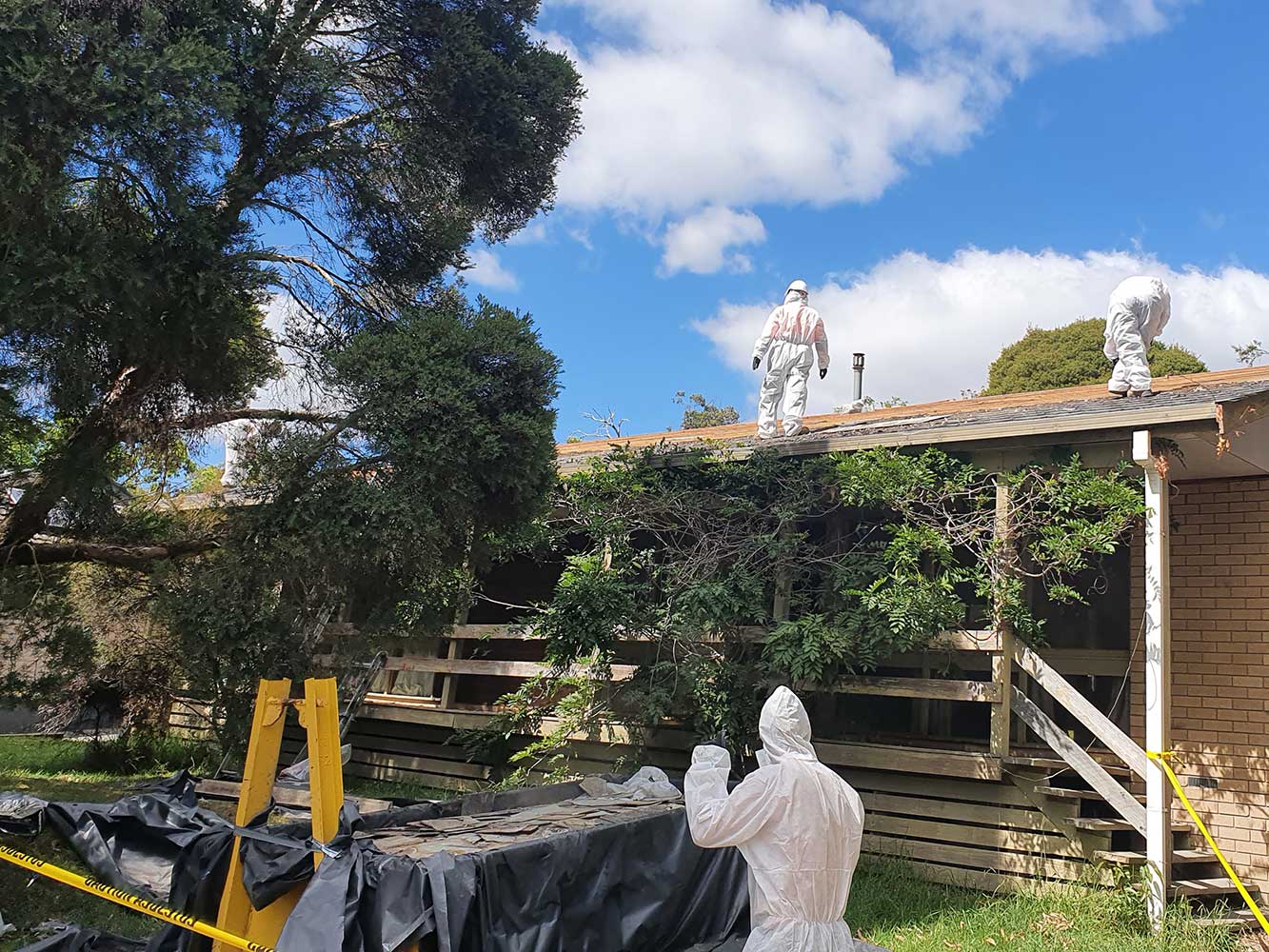
Quick answer: Friable asbestos is loose material that can be crumbled into dust with light hand pressure when dry, while non-friable (bonded) asbestos is asbestos fibre locked into a solid material such as cement or vinyl. Friable asbestos releases fibres much more easily, so in Victoria any amount of it must be removed by a Class A licensed removalist, while non-friable asbestos over 10 square metres needs at least a Class B licence.
These two terms come up constantly once you start looking into asbestos in a home or workplace. Knowing which type you are dealing with helps you understand the level of risk, who is allowed to remove it and what the job will involve. Here is how the two compare.
What friable asbestos is
Asbestos in Victoria, the Victorian Government’s asbestos information site, describes friable asbestos products as generally quite loose and able to be crumbled into fine material or dust with light pressure when dry. They can contain very high proportions of asbestos, up to 100 per cent in some products, and the fibres are released into the air easily when disturbed.
Friable asbestos was mostly used in commercial and industrial settings. Examples include:
- pipe lagging and boiler insulation
- sprayed insulation and fireproofing
- some older heater and appliance insulation
The Better Health Channel notes that loosely bound or friable asbestos was rarely used in homes, although it may turn up in older pipe insulation or heaters.
What non-friable asbestos is
Non-friable asbestos, also called bonded asbestos, is made by mixing a bonding compound such as cement with a small amount of asbestos, usually less than 15 per cent. The result is solid and rigid, and the fibres are tightly bound. When it is undamaged, it does not normally release asbestos fibres into the air.
This is the type most Victorian homeowners come across. Common examples include:
- asbestos cement sheeting, often called fibro, used on walls, eaves and in wet areas
- corrugated asbestos cement roofing
- asbestos cement fencing
- vinyl floor tiles and some vinyl sheet flooring
- moulded products such as flues, pipes and downpipes
Asbestos was used in Australian building products until the mid to late 1980s and was banned nationally at the end of 2003, so homes built before the mid 1980s are highly likely to contain some of these products.
How non-friable asbestos can become friable
The line between the two types is not fixed. Government guidance explains that non-friable asbestos can become friable when it is damaged or badly weathered, for example by hail damage. Certain work can also break it down, such as crushing asbestos cement sheets.
This matters in real homes. An old corrugated fibro roof that has weathered for decades, a fence broken in a storm, or sheeting smashed during an unplanned demolition can all move from low risk to higher risk. If bonded asbestos has been damaged, treat it with more caution and get professional advice before touching it.
Why the difference matters for removal
Victoria’s licensing rules are built around this distinction. WorkSafe Victoria issues two classes of asbestos removal licence:
- Class A licence holders can remove friable asbestos and asbestos contaminated dust, as well as non-friable asbestos.
- Class B licence holders can remove non-friable asbestos and the dust associated with removing it.
Asbestos in Victoria states that all friable asbestos must always be removed by a licensed removalist. Non-friable asbestos can be removed without a licence only where the total area is no more than 10 square metres and the work takes no more than one hour in any seven day period. Anything larger must be done by a licensed removalist.
Friable removal is a more involved job. Class A work includes extra controls such as enclosures and having the nominated supervisor on site at all times. Licensed removalists must also notify WorkSafe at least five days before starting work on friable asbestos or on non-friable asbestos over 10 square metres, and a clearance certificate from an independent person is needed before the area is reoccupied.
How to tell which type you have
You cannot confirm whether a material contains asbestos, or what kind of asbestos product it is, just by looking at it. Government guidance says only scientific testing of a sample by a NATA accredited laboratory can confirm it. Our asbestos testing service takes samples safely, and an asbestos inspection can assess the condition of materials across your property, including whether bonded products have been damaged.
If removal is needed, we can handle common bonded asbestos jobs such as asbestos roof removal and asbestos flue removal.
Common questions
Which is more dangerous, friable or non-friable asbestos?
Friable asbestos is generally more dangerous because it crumbles easily and releases fibres when disturbed. Non-friable asbestos is lower risk when intact, but it can release fibres if it is cut, drilled, broken or badly weathered.
Is fibro friable or non-friable?
Asbestos cement sheeting, commonly called fibro, is a non-friable (bonded) product. However, fibro that is badly weathered, hail damaged or crushed can become friable and should be handled with extra care.
Who can remove friable asbestos in Victoria?
Only a removalist holding a Class A licence from WorkSafe Victoria can remove friable asbestos. There is no minimum quantity, so any amount of friable asbestos needs a Class A licence holder.
This article is general information only. For advice about your property, speak with a licensed asbestos professional.
Aussie Asbestos Solutions is fully licensed and accredited, registered with EPA Victoria and has over 25 years of experience with residential and commercial asbestos. If you are unsure what you have, get a free quote or call 0410 336 410.
