 Licensed Class B Removalist
 Australian Owned, Fully Licensed & Accredited
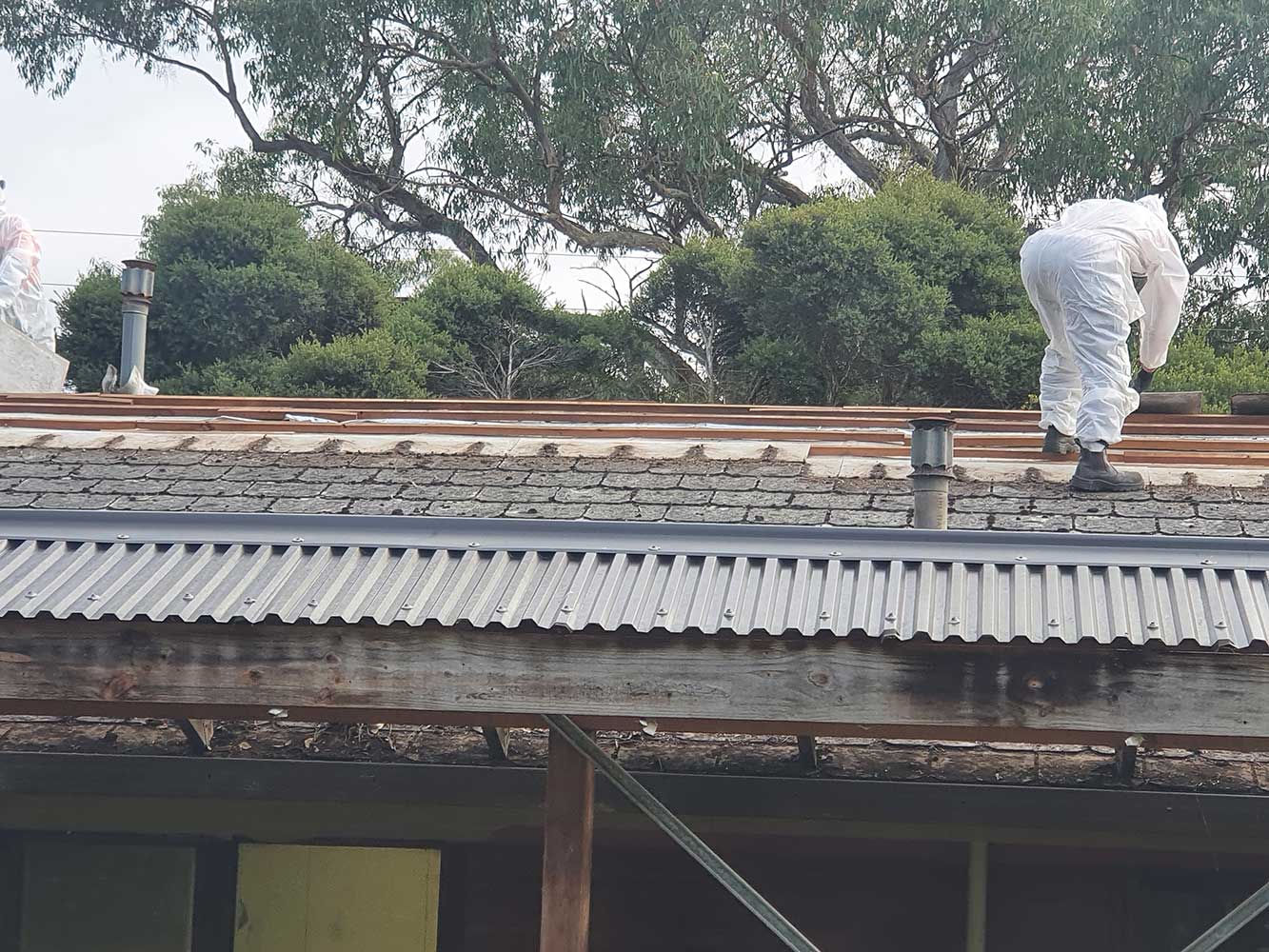
Quick answer: Fibro in a Victorian home built before the mid 1980s very often contains asbestos, while fibre cement sheeting made after that time generally does not. You cannot tell the two apart just by looking, so the only way to be sure is to have a sample tested by a NATA accredited laboratory.
“Fibro” is the everyday Australian name for fibre cement sheeting. For decades it was one of the most popular building materials in the country because it was cheap, light and easy to work with. The catch is that for most of that time the fibre in the cement was asbestos. This article explains how old fibro differs from modern fibre cement, where you are likely to find it, and what to do if you think your home has it.
Why so much old fibro contains asbestos
Asbestos cement sheeting was made by mixing cement with asbestos fibres to make the sheets strong and fire resistant. Government guidance notes that non-friable products like these usually contain less than 15 per cent asbestos, bound tightly into the cement. The national Asbestos Product Guide lists many well known brand names for flat asbestos cement sheeting, including Fibrolite, Hardiflex, Flexboard and Durabestos.
Production of asbestos cement sheeting in Australia wound down in the mid 1980s, and the use of all forms of asbestos was banned nationally at the end of 2003. Better Health Channel advice from the Victorian Government says homes built before the mid 1980s are highly likely to contain asbestos products, and homes built after 1990 are unlikely to. If your home was built or renovated somewhere in between, the answer could go either way.
How modern fibre cement is different
Modern fibre cement sheeting uses cellulose (wood pulp) fibres instead of asbestos. It is still sold widely for cladding, eaves and wet area linings, and it is safe to cut and drill when you follow the manufacturer’s instructions. Some product names carried over from the asbestos era with small changes. For example, the Asbestos Product Guide notes that Hardiflex II replaced the original asbestos containing Hardiflex. That is one reason a brand name printed on the back of a sheet is a clue, not a guarantee.
From the outside, painted old fibro and painted new fibre cement can look almost identical. Both are flat, grey and smooth on one side, and both can be covered in render or texture coatings.
Clues that your fibro may be the older type
While only testing can confirm it, these clues suggest you should treat a sheet as if it contains asbestos until proven otherwise:
- Age of the home or extension. Anything built or added before the mid 1980s is the biggest warning sign.
- Location. Old fibro was used for external walls, gable ends, eaves, sheds, garages, fences, bathroom and laundry linings, and even under floor coverings.
- Cover strips. Old sheeting was often joined with timber or plastic cover strips over the joints.
- Broken edges. The Asbestos Product Guide describes breakages in asbestos cement sheeting as characteristically jagged.
- Weathering. Rough, crumbly or hail damaged surfaces on an older sheet are a concern, because damaged or weathered asbestos cement can become friable and release fibres more easily.
None of these clues is proof on its own. A 1990s extension could have been lined with new fibre cement right next to original 1960s fibro, and the two may look the same once painted.
How to find out for certain
Asbestos in Victoria, the Victorian Government’s asbestos information site, is clear on this point: you cannot tell whether a material contains asbestos just by looking at it. Only scientific testing of a sample can confirm it, and the sample should be analysed by a NATA accredited laboratory accredited by NATA (the National Association of Testing Authorities).
Taking a sample means breaking off a small piece of the sheet, which disturbs the material. Government guidance recommends that a competent person collects it, such as an occupational hygienist, a licensed removalist or a NATA accredited laboratory. Our asbestos testing service handles the sampling and sends it for analysis, and an asbestos inspection can look at the whole property if you are planning renovations and want to know what else might be there.
What to do if your fibro contains asbestos
Finding asbestos fibro is very common and is not a reason to panic. Government guidance says that as long as non-friable asbestos stays undisturbed and in good condition, the risk of fibres being released into the air is low. Many people live safely with painted, intact fibro for years.
The risk rises when the material is damaged or disturbed. To keep things safe:
- Do not drill, cut, sand, grind or water blast old fibro.
- Do not use power tools on it, even for small jobs like hanging a picture or installing a fitting.
- Keep it painted and in good repair, and check it after storms or hail.
- Get advice before any renovation or demolition that will touch the sheeting.
If the fibro needs to come out, for example during a bathroom renovation or an extension, a licensed removalist can take it down, package it and dispose of it at a site authorised to accept asbestos. We handle asbestos wall removal for internal and external linings as well as eaves and sheds.
Common questions
Is all grey fibro sheeting asbestos?
No. Fibre cement made after the mid 1980s generally uses cellulose fibres instead of asbestos, and it looks very similar to the old product. Age is a strong clue, but only laboratory testing of a sample can confirm whether a particular sheet contains asbestos.
Is it safe to live in a house with asbestos fibro?
Government guidance says undisturbed non-friable asbestos in good condition poses a low risk of fibre release. The main risks come from damaging it through drilling, cutting, sanding or weathering, so keep it intact and get advice before any work.
Can I test fibro myself?
Testing involves taking a sample, which disturbs the material. Victorian Government guidance recommends a competent person collects the sample and that it is analysed by a NATA accredited laboratory. Using a professional keeps the process safe and the result reliable.
This article is general information only. For advice about your property, speak with a licensed asbestos professional.
Aussie Asbestos Solutions is a licensed, Australian owned team based in Chelsea Heights with over 25 years of experience helping Victorian homeowners, landlords and businesses. If you are not sure what your fibro is made of, get a free quote or call us on 0410 336 410.
